
Estimated Water Reads and the “Catch-Up Bill” Problem
How an estimated meter reading can shift charges between bills, what to photograph, and how to question the result without missing a deadline.
An estimate moves uncertainty into a later bill
When a utility cannot obtain or receive a reliable meter reading, it may calculate usage from account history or another approved method. If the estimate is lower than actual cumulative use, the next actual reading can place the unbilled difference onto one statement. The later bill looks like a sudden spike even though some of the water was used earlier.
The reverse can happen too. An estimate above the eventual read can produce a correction or credit. The key is that most meters are cumulative: the difference between two accepted readings, not the isolated number printed on one bill, determines measured consumption.
A simple example
Imagine an accepted reading of 100,000 gallons. The next bill estimates the meter at 104,000, so 4,000 gallons are billed. By the following cycle, the actual meter reads 111,000. The new bill may show 7,000 gallons—the difference between 104,000 and 111,000—even if household use did not suddenly jump during that single cycle.
This example ignores fixed charges, tiers, taxes, and billing adjustments, but it shows why comparing only each month’s usage can be misleading. Reconstruct the chain of previous read, estimated read, and later actual read.
Find the read type and index
Look for labels such as actual, estimated, customer read, AMI, corrected, or read type. New York City DEP advises customers with an estimated bill to compare the bill’s reading index and read date with the number displayed on the meter. The current physical reading will normally be somewhat higher because time has passed.
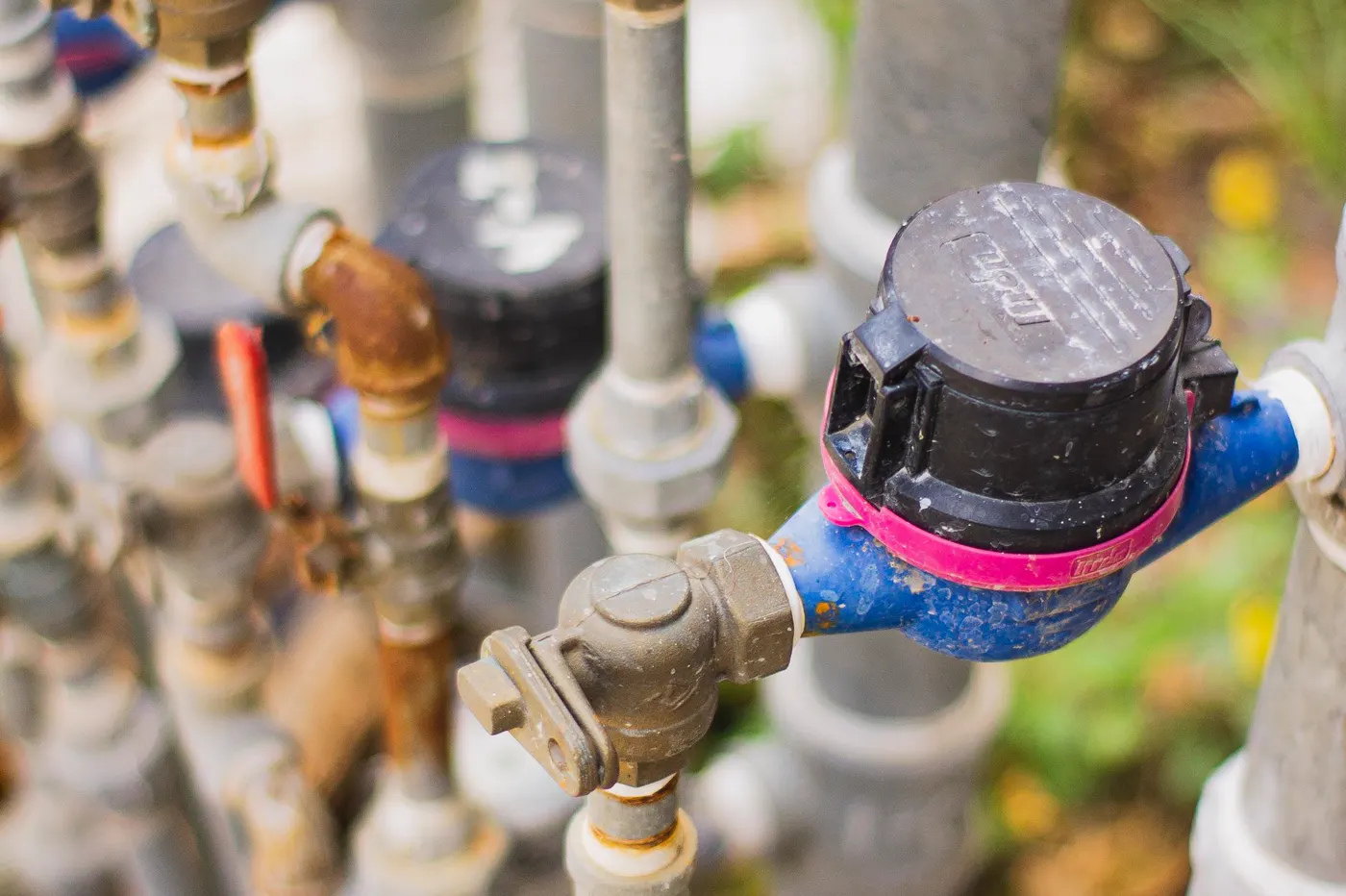
Photograph the whole meter and a close view of the register without opening, moving, or tampering with utility equipment. Include a timestamp and note whether all digits, decimal positions, and unit labels are visible. Some registers display leading zeros that a bill omits.
Check days and units before alleging excess use
A catch-up bill may cover a normal number of calendar days but reconcile usage that accumulated across more than one period. Also check whether the utility changed from gallons to thousands of gallons, from cubic feet to CCF, or from an old meter register to a new one after replacement.
Use the site’s bill comparison calculator to normalize gallons per day, but keep the result in perspective. A daily-use calculation can reveal a pattern; it cannot prove that a meter reading, multiplier, or rate application was wrong.
Do not let estimates repeat silently
NYC DEP tells customers not to allow consecutive estimates to continue beyond three sequential bills without contacting the department. That instruction is specific to New York City, but the practical lesson travels: repeated estimates deserve early attention because the eventual reconciliation can grow.
Ask why the read was estimated. Common explanations include inaccessible equipment, a stopped or obscured register, failed remote communication, construction, weather, or a pending meter replacement. Ask what access or appointment is needed and how to submit a customer reading if the local utility accepts one.
Build the question around the reading chain
Provide the bill dates, service dates, previous index, current index, read types, billed units, and your dated meter photograph. Ask the utility to show the reads and multiplier used. If the physical register appears lower than the billed index, do not manipulate it; report the discrepancy and request an inspection.
A formal meter test may have eligibility rules or a customer charge when the equipment tests within tolerance. Ask for those terms before ordering a test. Also ask whether a high reading could reflect a leak on the property side, a meter exchange, or a correction to prior billing.
Protect the account while the question is reviewed
An estimated designation does not automatically cancel the bill or suspend collection. NYC’s guidance, for example, says a valid estimate based on good history remains payable. Your provider’s dispute and payment-arrangement rules control.
Ask in writing what must be paid by which date, whether the disputed portion is held, and whether collection activity continues. Keep confirmation numbers and copies of everything submitted. A precise reading question is much easier to resolve than a general statement that the bill “looks too high.”
Research & references
Official guidance behind this article
These public resources informed this guide. They provide national context; your water provider’s current account-specific rules, notices, and instructions take priority.
- Water and Sewer Bills Frequently Asked Questions New York City Department of Environmental Protection · How to identify and compare an estimated meter reading with the physical meter.
- Understanding Your Bill City of Oklahoma City Utilities · Base charges, 1,000-gallon units, estimates, and an official winter-average example.
- Understanding Your Water Bill U.S. Environmental Protection Agency · Rate structures, common units, and bill components.