Who Owns the Pipe Between the Water Main and Your House?
Separate service-line material, ownership, repair responsibility, and lead-inventory status before planning work or assigning blame for a leak.
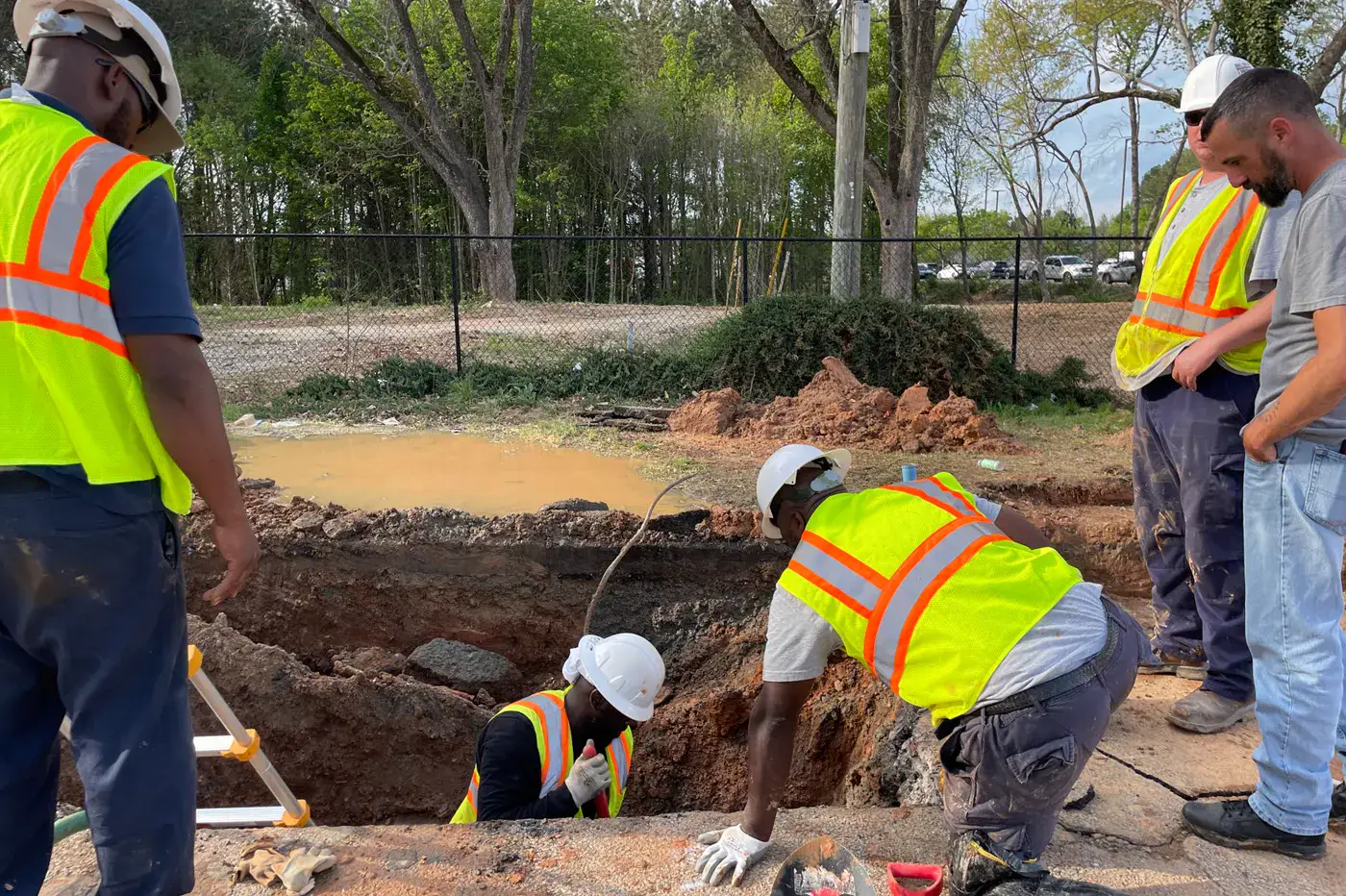
One physical connection can cross several legal boundaries
The water main normally runs in a public right-of-way. A smaller service line carries water from that main toward the building, and premise plumbing continues inside. The meter, curb stop, property line, building wall, or another point may matter—but the ownership boundary is established by local rules, not by one national diagram.
Some systems own the full service line, some place it on the property owner, and many split ownership. Rental agreements, condominium documents, easements, and local ordinances can add another layer. Before arranging excavation or accepting a repair estimate, ask the utility to identify the applicable boundary in writing.
Material and ownership are different questions
A pipe can be lead, galvanized, copper, plastic, or another material regardless of who owns it. EPA’s service-line guidance recognizes that a line can be owned by the water system, the property owner, or both. A material inventory is designed to identify risk and support replacement; it does not by itself rewrite local ownership or promise who will pay.
Ask four separate questions: What material is recorded on the system-owned side? What material is recorded on the customer-owned side? Who controls work on each portion? Which current program, ordinance, or agreement determines cost responsibility?
“Unknown” is a real inventory category
EPA’s federal inventory uses categories including lead, galvanized requiring replacement, non-lead, and lead-status unknown. An unknown classification does not prove that a pipe is lead. It means the available evidence did not support one of the other classifications at that point in the inventory.
Likewise, a system-level count does not tell you the material at a particular address. EPA notes that reported non-lead counts can be incomplete because nationwide reporting requirements phase in. Use the utility’s public inventory or customer notification for the service connection, and ask when an unknown classification will be investigated.
Public inventories create a better starting point
EPA says systems must develop publicly accessible service-line inventories and notify people served by lead, galvanized-requiring-replacement, or unknown lines. The format varies: an address lookup, interactive map, downloadable table, block-level list, or direct customer notice may be used.
Search by the provider name and “service line inventory,” then confirm that the page belongs to the correct utility. If an address lookup returns no result, that can mean the record is unavailable or unmatched—not automatically that the line is non-lead. Save the result date and contact the utility for interpretation.
Do not use appearance alone as a final classification
EPA offers consumer guidance for investigating pipe material, and a licensed plumber or utility may help. Visual checks can be complicated by paint, corrosion, connectors, repairs, or multiple materials along one line. Do not sand, cut, disturb, or excavate a suspected lead line simply to identify it.
If lead is suspected, follow current public-health and utility guidance while the material is confirmed. A water-quality test and a material inventory answer related but different questions: one samples water under stated conditions, while the other classifies infrastructure.
For a leak, establish control before authorizing work
Report active water surfacing near the meter, street, curb, or public main through the provider’s emergency channel. Keep clear of undermined pavement and utility equipment. Ask whether the utility will inspect first and whether a private plumber must wait for a locate or permit.
Document where water appeared, when it began, meter movement, utility findings, and the exact boundary cited. Do not assume the visible wet spot marks the break; water can travel underground before emerging.
Replacement funding is program-specific
EPA identifies federal and non-federal funding resources for lead service-line inventory and replacement, but availability reaches households through state and local programs with their own eligibility, prioritization, contracts, and schedules. A federal funding announcement is not automatically an individual award.
Ask whether the utility has a replacement program, whether both sides of a split line are covered, whether participation is mandatory, what restoration work is included, and whether the owner must use an approved contractor. Get those terms before signing access or cost agreements.
The durable record
Keep the utility’s ownership rule, inventory result, material notification, photographs, inspection notes, permit information, and replacement documents together. Future owners, tenants, plumbers, and the utility may otherwise be forced to repeat the same investigation.
The most useful conclusion is specific: this utility reports this material, at this location, as of this date, under this ownership rule. Anything broader risks turning a complicated infrastructure record into a misleading promise.
Research & references
Official guidance behind this article
These public resources informed this guide. They provide national context; your water provider’s current account-specific rules, notices, and instructions take priority.
- Lead Service Lines U.S. Environmental Protection Agency · Service-line inventories, material identification, replacement, and funding resources.
- Lead and Copper Rule Improvements Questions and Answers U.S. Environmental Protection Agency · Public inventories, customer notification, and ways to investigate service-line material.
- Service Line Inventory U.S. Environmental Protection Agency SDWIS · Reported service-line categories and important completeness caveats.